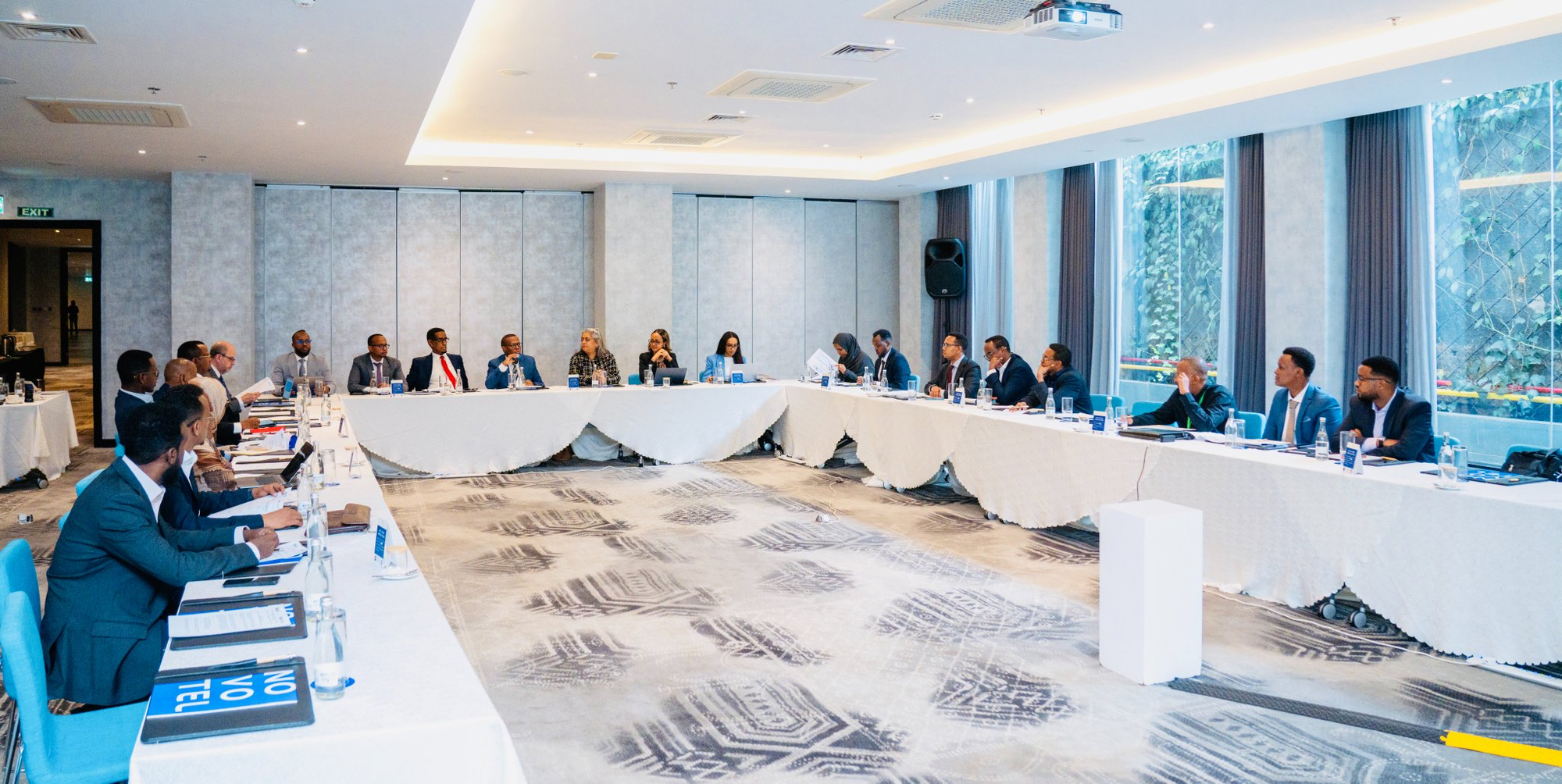
The National Communications Authority (NCA) opened the country's first technical working group on submarine cable landings on Sunday, a two-day session in Nairobi that brought together cable operators, internet service providers and engineers to coordinate the next phase of development for the country's international connectivity.
The workshop was organised by the NCA with the International Finance Corporation (IFC), the private-sector arm of the World Bank Group, under the IFC-supported Somalia Broadband Infrastructure Project. Sessions cover outage management, competition, infrastructure development and the implementation of Somalia's submarine cable regulation. Delegates were also asked to review a recently completed report on the country's telecommunications market, validating its findings and setting priorities for the sector.
"Submarine cables are the backbone of Somalia's digital connectivity," the NCA's director general, Mustafa Yasin Sheikh, said in opening remarks, adding that closer coordination between the regulator and industry would help build a more resilient network.
Somalia's international connectivity has expanded steadily over the past decade. The country is now served by four submarine cables, EASSy, Gulf2Africa, DARE1 and PEACE, terminating at landing stations in Mogadishu, Berbera and Bosaso. DARE1, in service since 2021, links Bosaso and Mogadishu to Djibouti and to Mombasa with up to 36 terabits per second of capacity, while PEACE, live since 2022, connects the region to both Asia and Europe.
More capacity is on the way. The Meta-led 2Africa system and the Africa-1 cable are due to land in Somalia, and PEACE is set to add further landing points at Kismayo and Bosaso. Operators have already built out facilities to receive new systems: Hormuud Telecom opened an open-access cable landing station, equipped by the infrastructure firm Vertiv, in 2022 to host multiple submarine cables. The working group is intended to give operators and the regulator a shared forum to manage that growth.
Resilience is a priority shared across the region. The Red Sea corridor carries a large share of traffic between Asia and Europe, and cable faults there in recent years, including disruptions in early 2024 and 2025, have affected multiple countries at once. Building redundancy through additional cables, clearer outage protocols and a stronger national backbone is the practical answer, and is the focus of much of this week's agenda.
Greater capacity should also lower costs. Research published in June 2025 found that doubling a country's international subsea capacity can reduce fixed broadband prices by about 32 percent and mobile broadband prices by as much as 50 percent. Somalia already offers some of the most affordable mobile data in Africa, and additional cable competition, paired with investment in the national fibre backbone, could extend those gains to users beyond the main coastal cities.
The IFC has worked alongside Somali institutions in the communications sector for years, including helping to finance the consortium that first connected the EASSy cable to the country. The market report under review this week, together with the new regulation, is intended to lay the groundwork for further private investment in cables, landing stations and inland fibre.