

Annual consumer price inflation in Somalia rose through the first quarter of 2026, reaching 7.8% in March from 5.6% in February and 5.4% in January, according to the Somali National Bureau of Statistics.
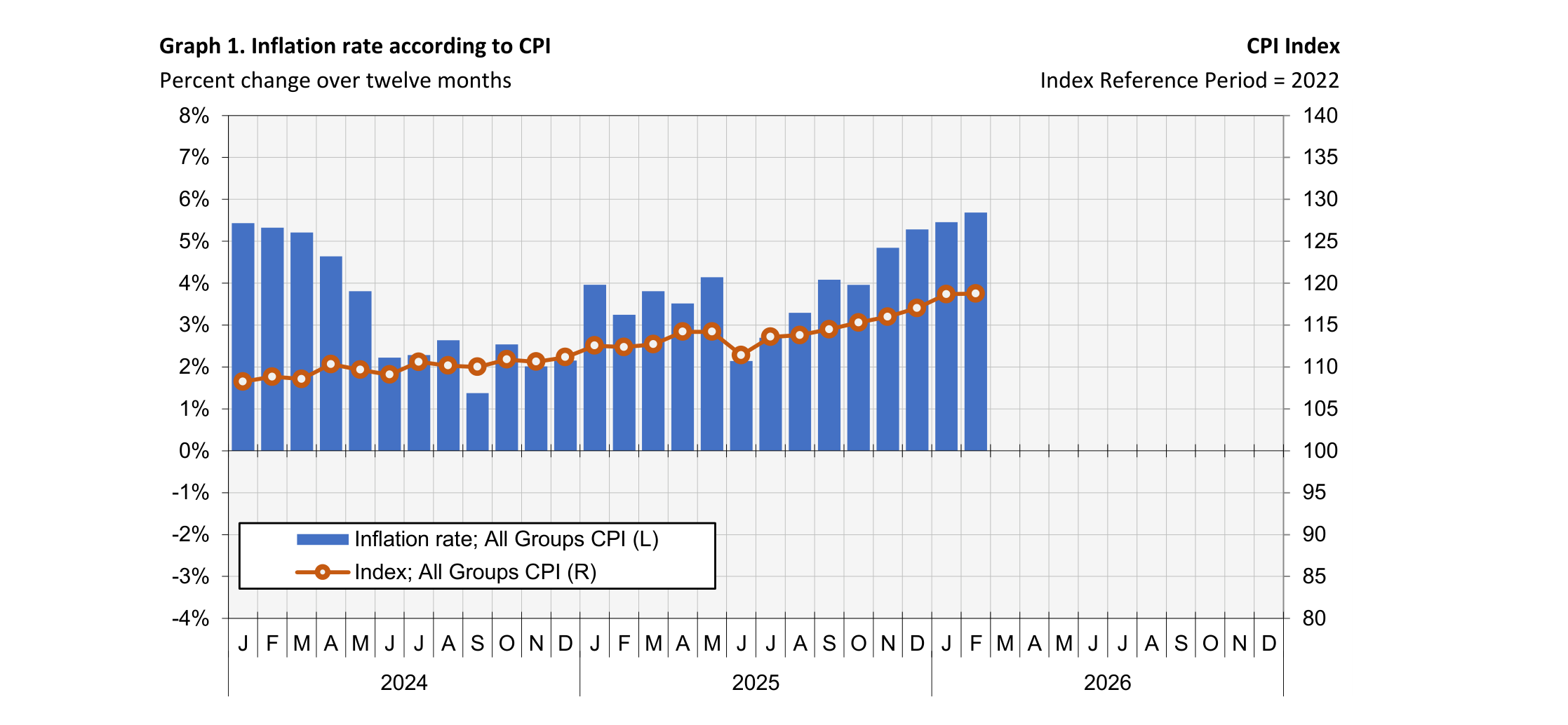
On a monthly basis prices rose 1.4% in January, were unchanged in February and rose 2.4% in March. The Somali National Bureau of Statistics revised its January and February annual readings down slightly as later data came in.
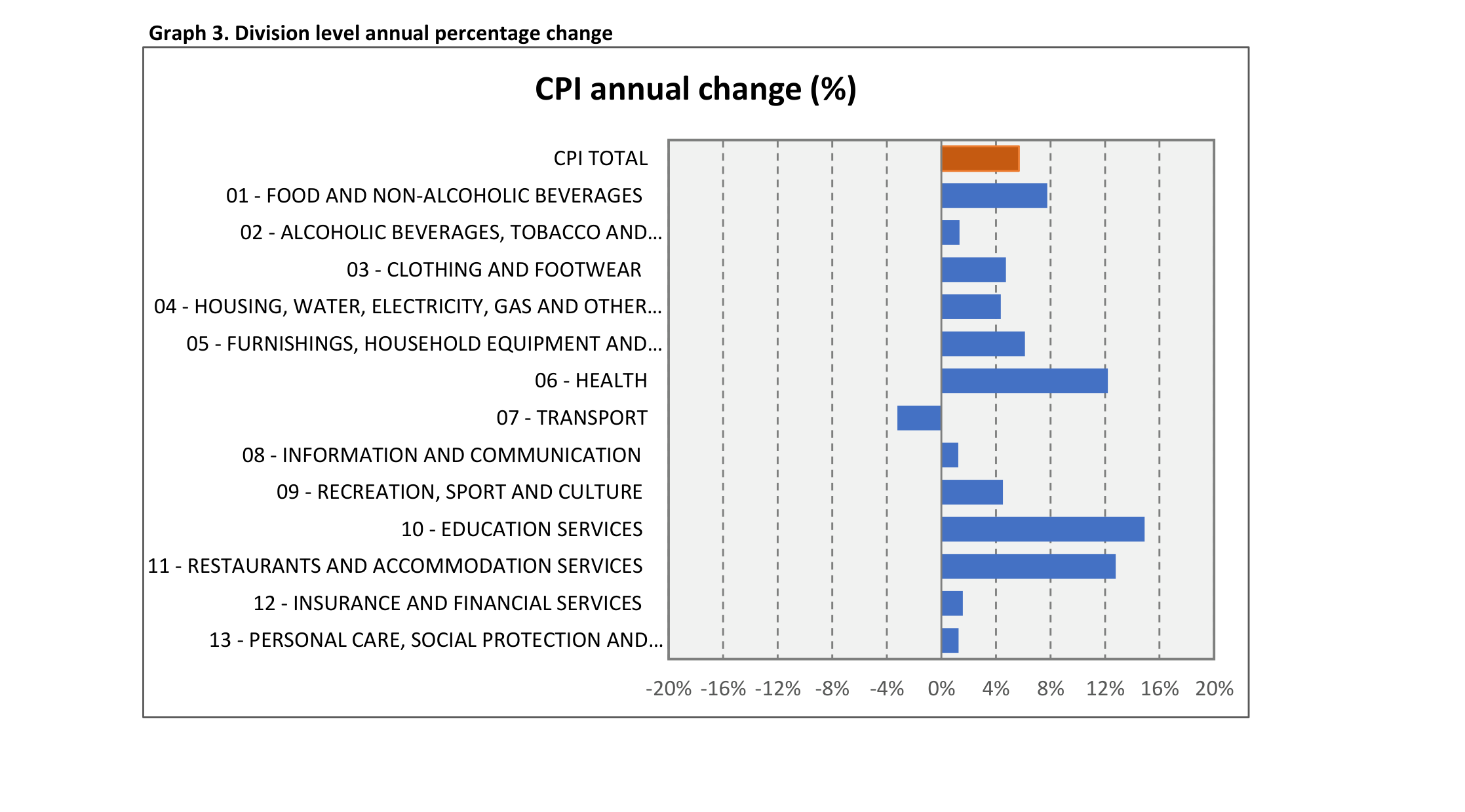
The March figure marked a clear shift. The headline rate is a weighted average of all thirteen divisions, so categories where prices fall pull the total down and soften the effect of those that rise. In January and February falling prices in divisions such as transport and personal care did exactly that, partly offsetting increases elsewhere. In March every division rose, leaving nothing to hold the index back.
The largest annual increases in March came from restaurant and accommodation services, up 20.9%, education services, up 14.9%, and health, up 13.7%. Housing and utilities rose 8.9% and food and non-alcoholic beverages 8.0%. Transport, which had been the main drag on the index, returned to growth at 4.7%.
Inflation rose across all Federal Member States over the quarter, led in March by South-West State at 9.3%, Banaadir at 8.9% and Galmudug at 8.8%.
The figures are best read as indicative rather than exact. The index is a relatively new series, rebased in 2025, and remains subject to revision as more data arrives, as the later adjustments to the January and February rates show. Figures for some regions, including Puntland, are estimated rather than collected directly.
The Somali National Bureau of Statistics typically publishes each month's index around two months after the reference period. On that basis the April figures are due shortly, though they have not yet appeared.
The direction of travel is likely upward. The Iran war that began in late February has pushed oil prices more than 40% higher, with Brent crude trading above $100 a barrel through March. Somalia imports almost all of its fuel and much of its food, and prices are set in dollars, so a sustained energy shock feeds directly into transport, electricity and the cost of imported goods. The conflict began near the end of the quarter, so part of the rise may already be visible in the March figures. If the disruption to oil supply persists, more of the effect would be expected to appear in subsequent readings, though the scale and timing will depend on how long prices stay elevated.