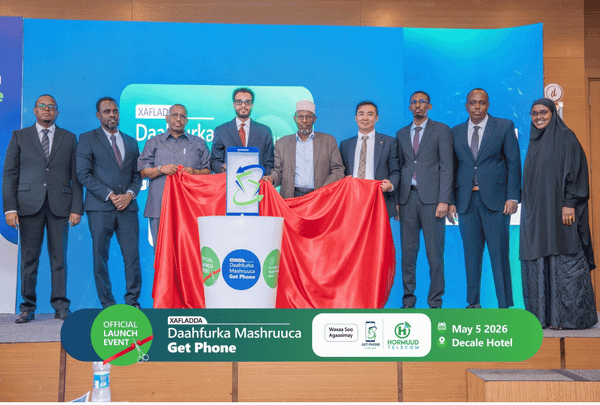
Two years into the East African Community, the returns to Somalia look modest, and lopsided. The economic gains many in Somalia expected from joining the EAC have been slow to arrive, and the trade that flows between Somalia and the bloc runs mostly one way, and mostly through a single member. Kenya for example exported about USD 130 million of goods to Somalia in 2024, vastly more than the few hundred thousand dollars of Somali goods Kenya bought in return. With the rest of the bloc, Uganda, Tanzania, Rwanda, Burundi, South Sudan and the Democratic Republic of Congo, Somalia has almost no trade to speak of in either direction. This imbalance is structural, and predates Somalia's membership bid. Somalia exported about USD 723 million of goods in 2024, almost all of it live animals, sheep, goats and camels, shipped to Saudi Arabia and Oman; the Gulf and Asia took roughly 96 percent of the total. In other words, the goods Somalia sells are not the goods its East African neighbours buy, and the goods the region makes, Somalia already imports.
Somalia has also fallen behind on its dues, owing about USD 10.5 million and seeing its elected regional legislators held up for months over the unpaid contributions. Membership, so far, has cost more than it has returned. But one part of it has moved quickly and reaches further into ordinary life than the trade figures: the passport.
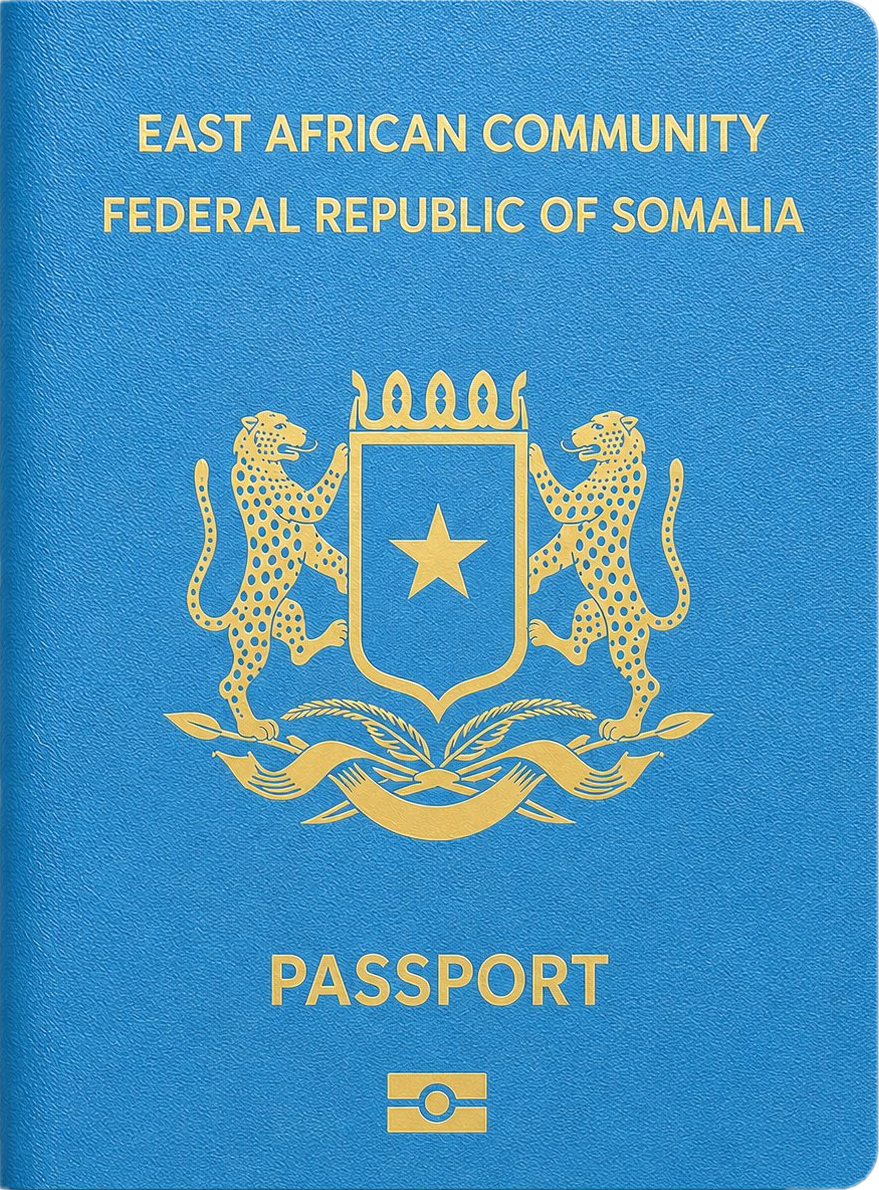
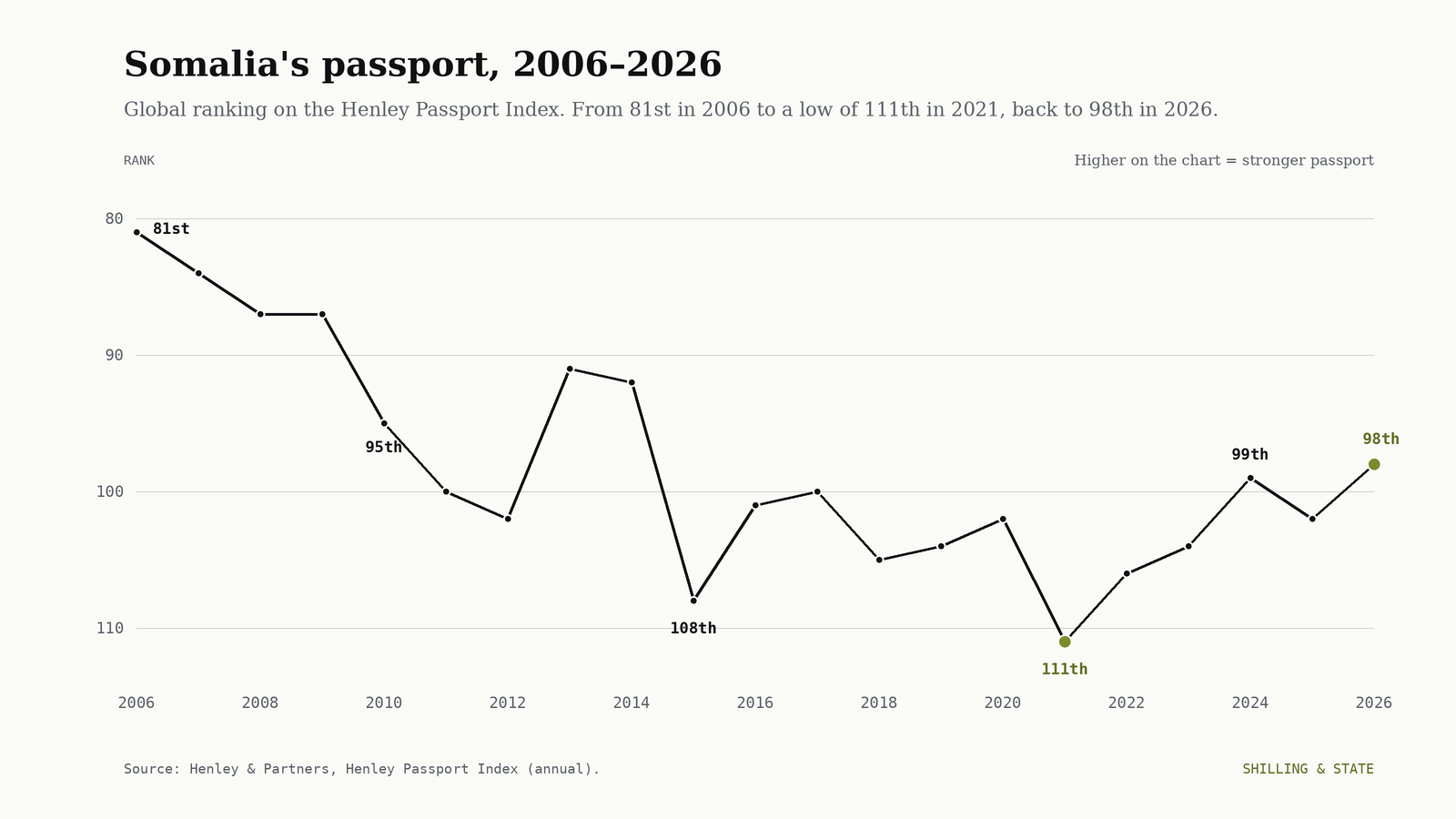
The change is more than cosmetic. Somalia's passport has long been among the world's weakest. On the Henley Passport Index, the Somali passport sits near the bottom of the global table, having weakened for the better part of two decades, with a barely modest recovery in recent years.
As it stands, a Somali traveller needs a visa for the region's countries much as for anywhere else. Membership is supposed to replace that with freer movement across a bloc of around 339 million people, that access has so far stayed mostly on paper. Kenya, which in 2024 opened visa-free entry to nearly every nationality, singled out Somalia and Libya as exceptions, citing the security threat from al-Shabaab and a history of cross-border attacks.
Those concerns are real, and the restrictions are likely to persist until Somalia can demonstrably address the security situation that drives them. Whether Somali businesses face comparable barriers to operating across the region, as opposed to travellers, is harder to say: there is little public data either way. What can be said is that Somalia's leverage to press for easier access is weaker while it remains behind on the contributions that buy a full voice in the bloc.
Still, the new passport should be a step toward that integration actually materialising. EAC passports are generally issued for ten years against the five of Somalia's current document, and if the new passport follows that standard, the validity would double. Should the security picture continue to improve and free movement take effect, a Somali passport would carry the right to live, work and travel across East Africa, and Somali traders and businesses would, in theory, gain a market of hundreds of millions of people rather than a national one. Wider visa-free access across the region would also lift the passport in the global rankings, where the score turns on how many destinations a holder can reach without a visa, meaningfully reversing a two-decade decline. For now those gains remain prospective, but the new document is one of the first concrete pieces of integration to reach a Somali citizen's hands.